




Based on this premise, Avenida Icaria in Barcelona renovates its central boulevard with a pavement made of decontaminating concrete slabs.
Location: Poblenou, Barcelona. Management: Copcisa Authors: Miquel Espinet and Antoni Ubach Execution: 2017 – 2018 Surface: 8,000 m² of the Central Boulevard
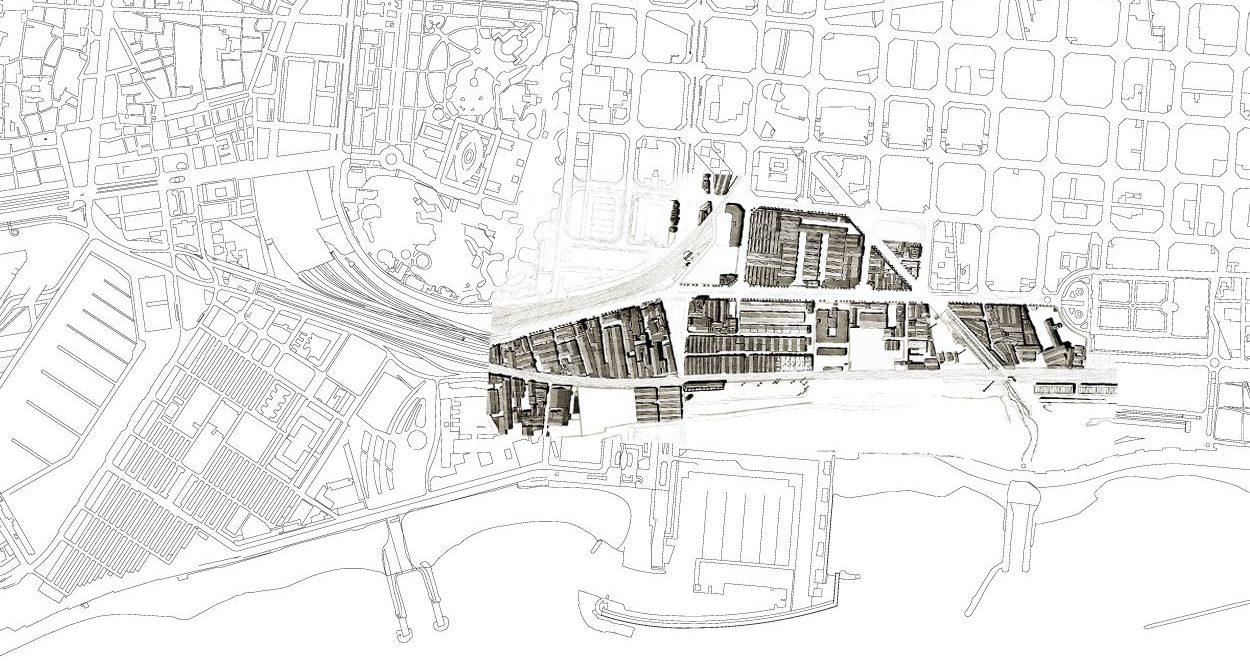
31 years since the urban development project of the Vila Olímpica
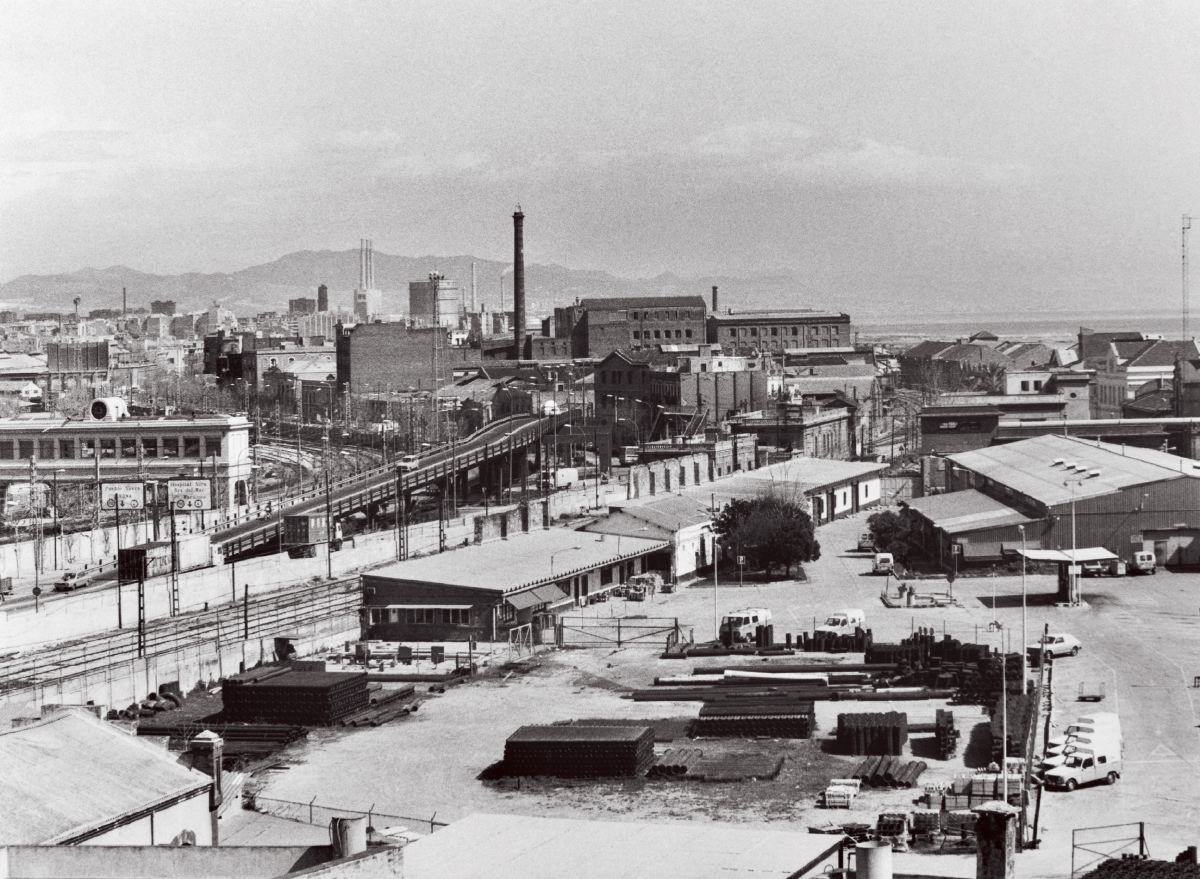
Just 31 years ago, the bulldozers of mayor Pascual Maragall began the demolition of the industrial neighborhood of Icaria to build the Vila Olímpica, the area where five years later the world’s top athletes would stay for a few weeks during the Games.
In total, 40 businesses and 37 residential buildings were demolished, resulting in the loss of an important industrial architectural heritage. The Icaria district, enclosed between two railway branches, had a low population density: 14 streets and only 142 residents.
The new Vila Olímpica, designed by architects David Mackay, Josep Martorell, Oriol Bohigas and Albert Puigdomènech, bore no resemblance to the emblematic Tallers Ferroviaris of Poblenou, the Rocamora factory, or the family wine storage company Pau Soler.
All factories and houses built on the site since 1870 disappeared, with only the chimney of the Can Folch factory being preserved.
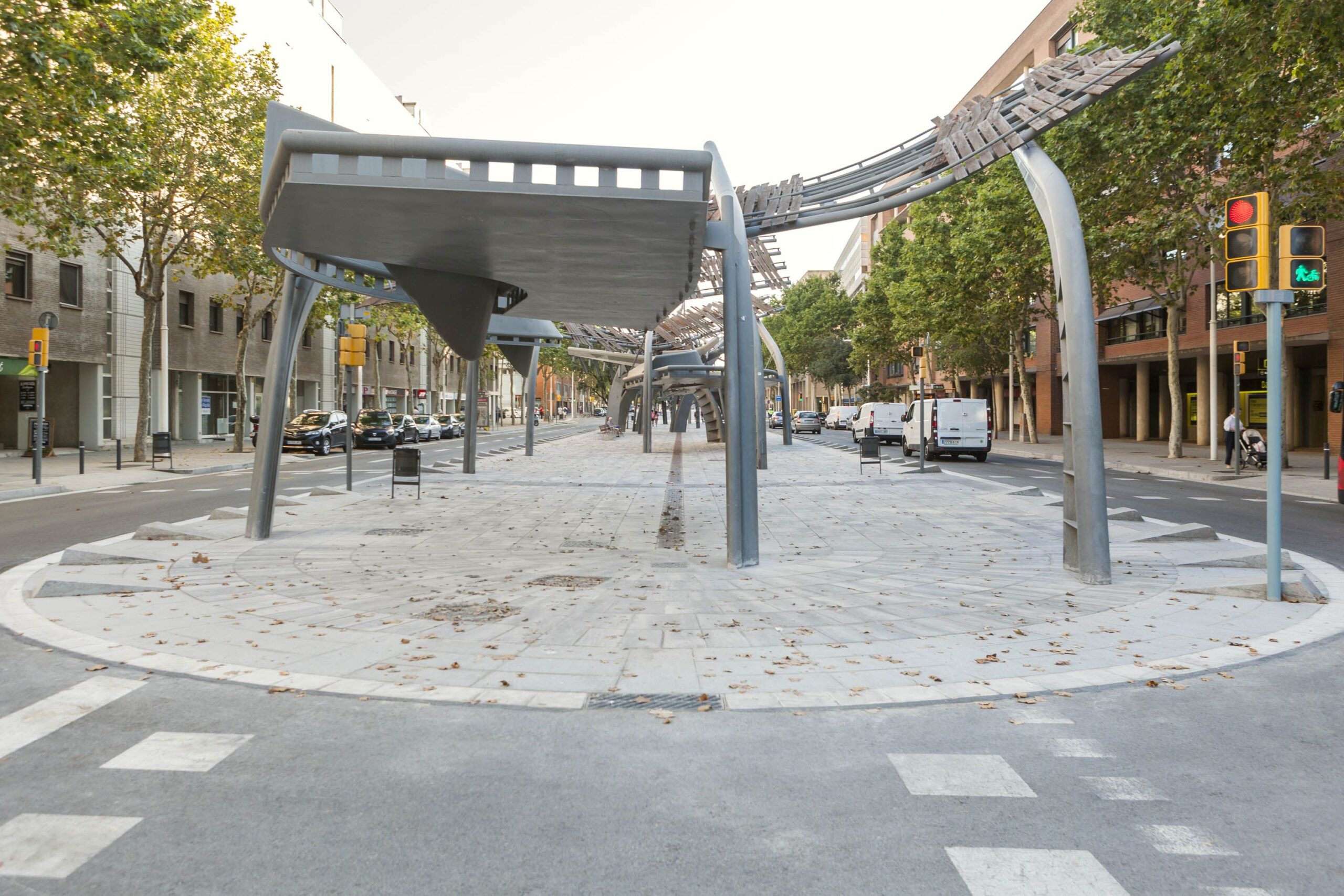
The Vila Olímpica opened with 1,834 homes, 180 commercial spaces and 3,500 parking spaces
The construction of the Vila Olímpica completely transformed Barcelona’s urban planning model. The coastal railway was moved underground, a new port was built, along with a new district and new road axes. This transformation opened the city to the sea and brought it closer to its citizens.
Since the Olympic Games
On November 24 of last year, renovation works began on Avenida Icaria, the main artery of the Vila Olímpica. The works were expected to last 7 months and aimed to replace the existing paving stones, which were worn and broken, with new precast concrete units.
The paving stones were in very poor condition due to time and intensive use of the central area by skateboarders, which accelerated their deterioration. The intervention has a cost of 2.2 million and covers a total of 800 meters.
The district councillor of Sant Martí, Josep Maria Montaner, explained that this would be “a very important change” for the Vila Olímpica because “the central boulevard had deteriorated and no comprehensive renovation had been carried out since 1992.”
The works were carried out in two phases. The first phase, which began in November 2017 and lasted until the end of February 2018, focused on the sections from Badajoz Street to Arquitecte Sert. The second phase, which began in March 2018 and ended in June 2018, affected the remaining three sections, from Arquitecte Sert to Marina. A total of 8,000 square meters.
The renovation of the avenue is the result of a participatory process with local residents, in which it was decided not to modify the structure or cross-section of the avenue as it currently stands. Instead, all worn or damaged paving stones on the central promenade were replaced, the street lighting was upgraded to LED technology, new benches were installed, and the tree pits were enlarged.
Montaner explained that once the works are completed, Avenida Icaria will become “an urban axis with more character and much more activity.” “It is the street with the highest concentration of shops in the neighborhood, and we want it to have more urban life like other areas of the city,” he added, noting that this is something the Vila Olímpica currently lacks. The aim is to encourage pedestrian use, which would bring greater dynamism to the commercial area.
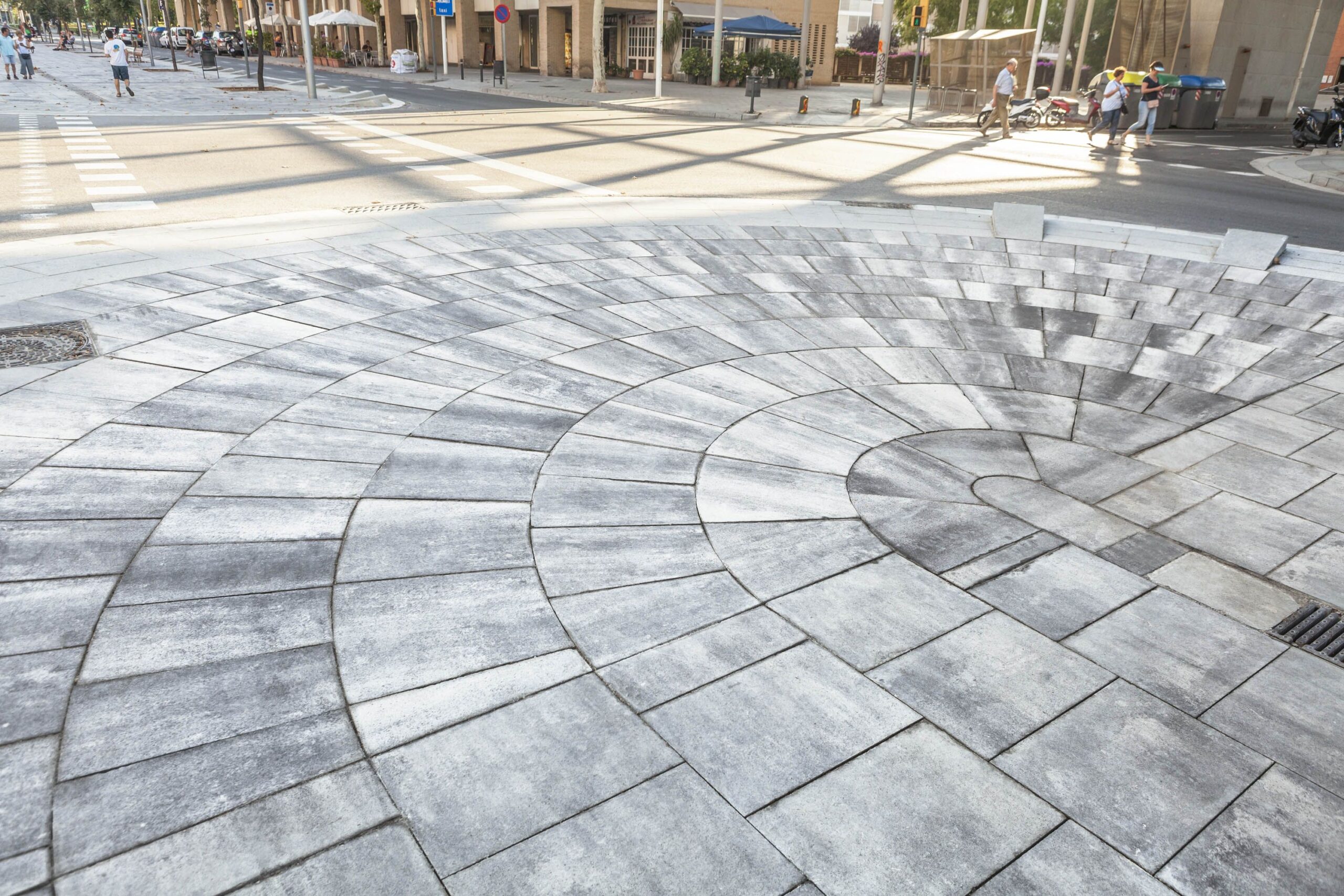
Photocatalytic pavement Llosa Vulcano Airclean. An innovative solution.
The Llosa Vulcano AirClean is a pavement that reduces air pollution through a photocatalytic decontaminating agent. Under sunlight, it triggers the decomposition of polluting nitrogen oxides (NOx) into by-products that are removed through rainwater drainage.
The active surface of the Llosa Vulcano keeps nitrogen dioxide (NO2) levels under control, continuously breaks down organic molecules, and operates reliably without interruption.
The renovation of Avenida Icaria has been carried out using Llosa Vulcano AirClean decontaminating slabs measuring 60x40x7 cm, which, in addition to supporting pedestrian traffic, maintain the desired aesthetic standards.
Tactile paving
In addition, tactile paving has been used to identify potential hazards for pedestrians and to provide warning guidance for safe navigation.
The purpose of tactile paving is to provide clear sensory information to blind people or those with significant visual or cognitive impairments.
The Tactile Warning or studded slab identifies risk and warning areas, and the raised buttons on the surface help detect curbs and road crossings.
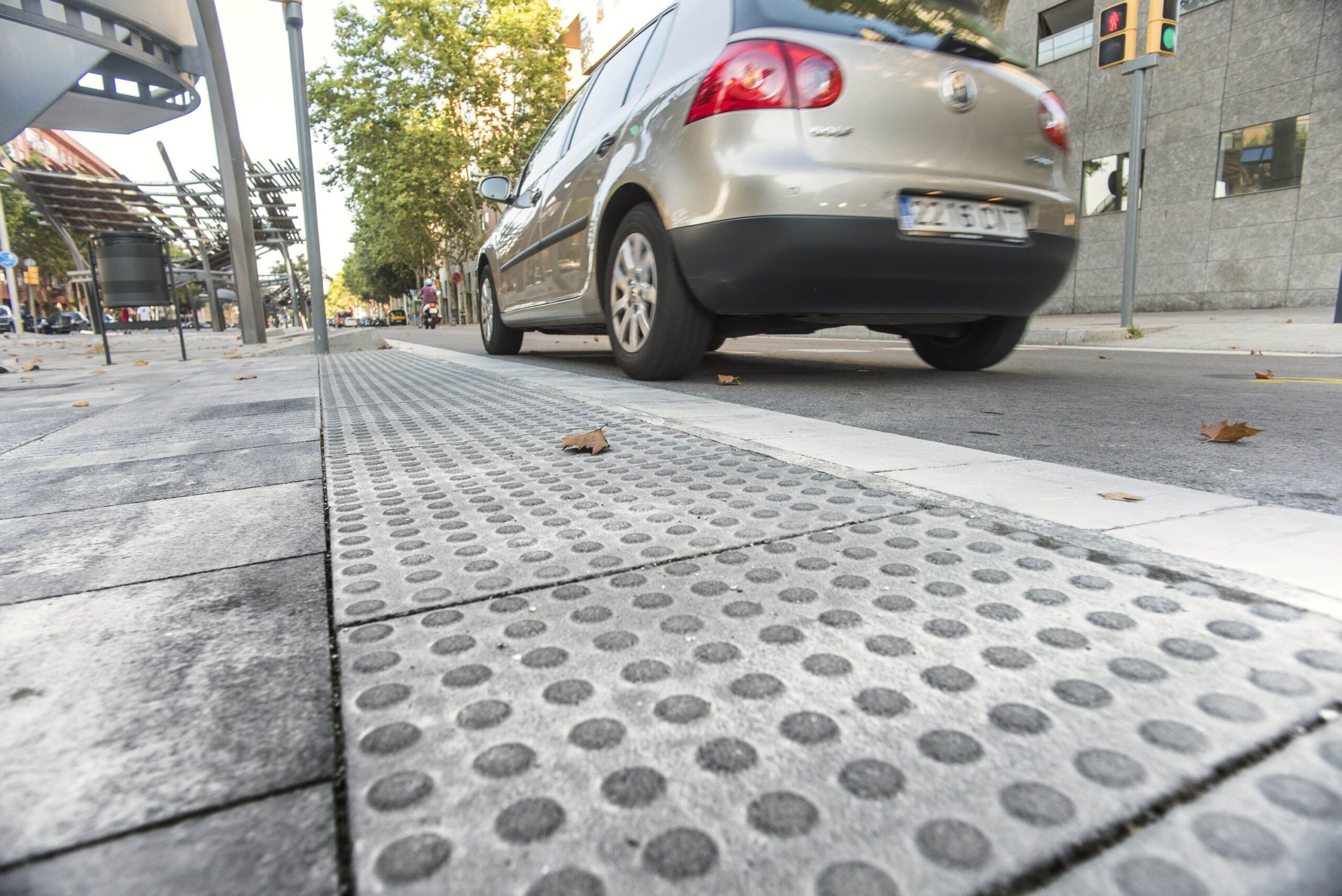
Photographer: Uatxut
Bibliography:
https://www.metropoliabierta.com/distritos/sant-marti/la-avenida-de-icaria-renovara-su-rambla-central_3867_102.html
https://www.metropoliabierta.com/distritos/sant-marti/la-avenida-de-icaria-patas-arriba_7123_102.html
http://bcn87-92.tempusfugitvisual.com/fot-doc/barrio-de-icaria-el-manchester-catalan/
