


What is SRI (Solar Reflectance Index)?
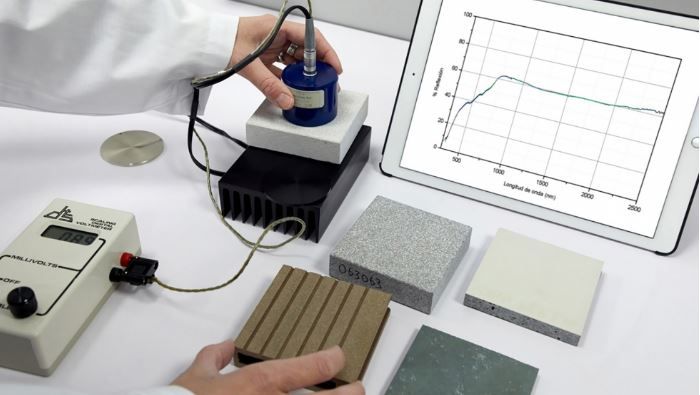
The SRI value allows a finish to be categorized based on its ability to help mitigate the urban heat island effect. Dark surfaces that heat up and store heat should be avoided; instead, light-colored surfaces should be used. According to the ASTM E 1980-11 standard, opaque coating materials placed horizontally or with a slight slope are characterized by the so-called Solar Reflectance Index (SRI). This Index is calculated from solar reflectance (SR) and the thermal emissivity degree (ε), and constitutes a measure of the relative heating of materials, taking into account the absorbed solar radiation and the heat radiated to the sky. Therefore, to know the (SRI) of a given material, we need to obtain two prior values of the material through testing: its solar reflectance and its thermal emissivity.
- SOLAR REFLECTANCE (SR): The ratio of reflected solar flux to incident solar flux, measured in accordance with ASTM E 903, ASTM E 1918, or ASTM C 1549.
- THERMAL EMISSIVITY (ε): A concept that measures the effectiveness in emitting energy as thermal radiation, ranging between 0.00 and 1.00. It is measured according to ASTM E 408 or ASTM C 1371.
What is the Heat Island?
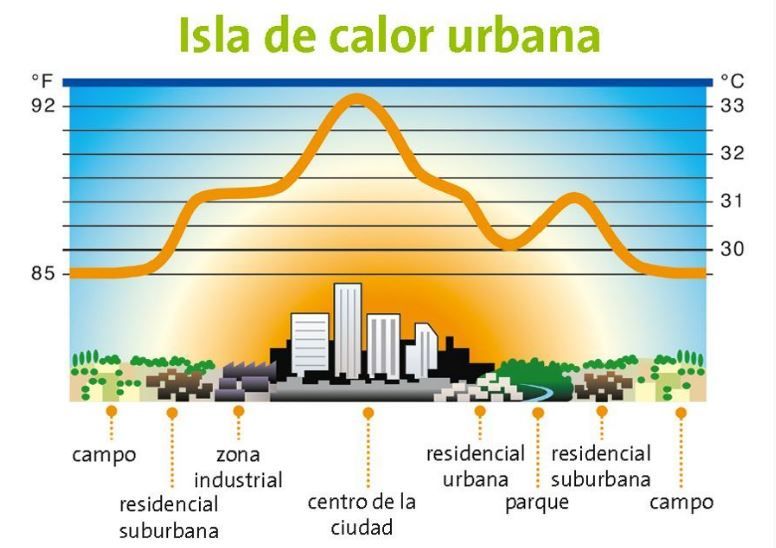
The urban heat island is a phenomenon that occurs in urban and suburban areas as a result of using materials with a high capacity for absorbing and retaining solar heat (albedo), far exceeding those of natural materials or less developed rural areas (Gartland, 2008). High urban temperatures increase energy consumption, raising electricity demand and pollution problems; furthermore, their results increase the ecological footprint, decrease thermal comfort, and create health problems for inhabitants. In order to reduce the cooling energy demand of buildings and limit the city heat island effect, within the framework of American standards, the optical properties of construction materials began to be included as design criteria. New projects or urban renovations must consider all sustainability variables in their design. One of the Sustainable Building certifications is that carried out by the U.S. GREEN BUILDING COUNCIL and is called LEED v4.1. This is one of the most widely used green building rating systems in the world. This certification provides a framework for healthy, highly efficient, and low-cost sustainable constructions. LEED defines a scoring system for the environmental and sustainable criteria of the project; specifically, it addresses the Heat Island concept in the sections that analyze project sustainability (SS Credit – Sustainable Sites), defining the following purpose:
To minimize effects on microclimates and human and wildlife habitats by reducing heat islands.
Use paving materials with an initial solar reflectance (SR) value of at least 0.33.
In the description of the classification process, it is detailed that either the SRI (Solar Reflectance Index) or SR (Solar Reflectance) value can be used alternatively for scoring calculations.
What SRI & SR values are obtained in the testing of BREINCO materials?
At Breinco, we have tested some of our paving materials in the TECNALIA and APPLUS laboratories, specifically the colors White Estándar, Listomat Snow White, and Listomat Terra Beige. The values obtained meet LEED requirements.
COLOR WHITE BREINCO
Solar Reflectance (SR) = 0.42
Thermal Emissivity = 0.97
(SRI) (Solar Reflectance Index) = 51.6
SR only deals with solar reflectance without delving deeper into the thermodynamic behavior of the material. In this case, 58 is absorbed and 42 is reflected. SRI changes the value because it also takes into account the ability to emit heat, and the emissivity of the material is also factored in, which does not depend solely on heat. This distinction is made based on the architectural element we are considering:
- In the case of a building roof where there is occupied space underneath, it is relevant to consider the SRI because it is not only important for the radiation to bounce off, but it is also crucial that the spaces below do not overheat. That is why we also consider the emissivity component.
- In the case of an urban development, a garden, or something completely outdoors without contact with a habitable space, we will only consider the SR and we will only assess how much radiation remains absorbed and how much is reflected.
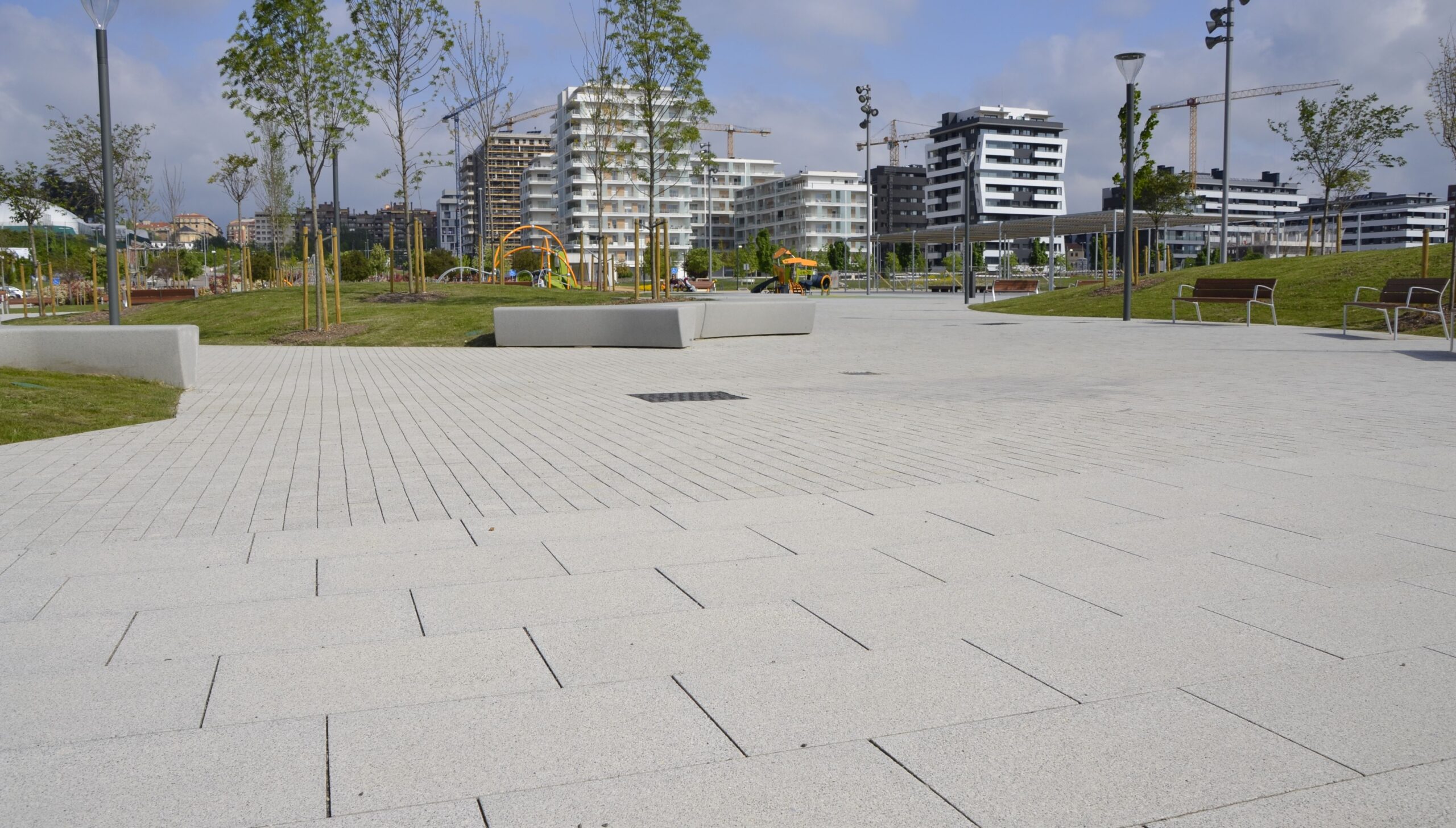
COLOR SNOW WHITE
Solar Reflectance (SR) = 0.56
Thermal Emissivity = 0.92
(SRI) (Solar Reflectance Index) = 66
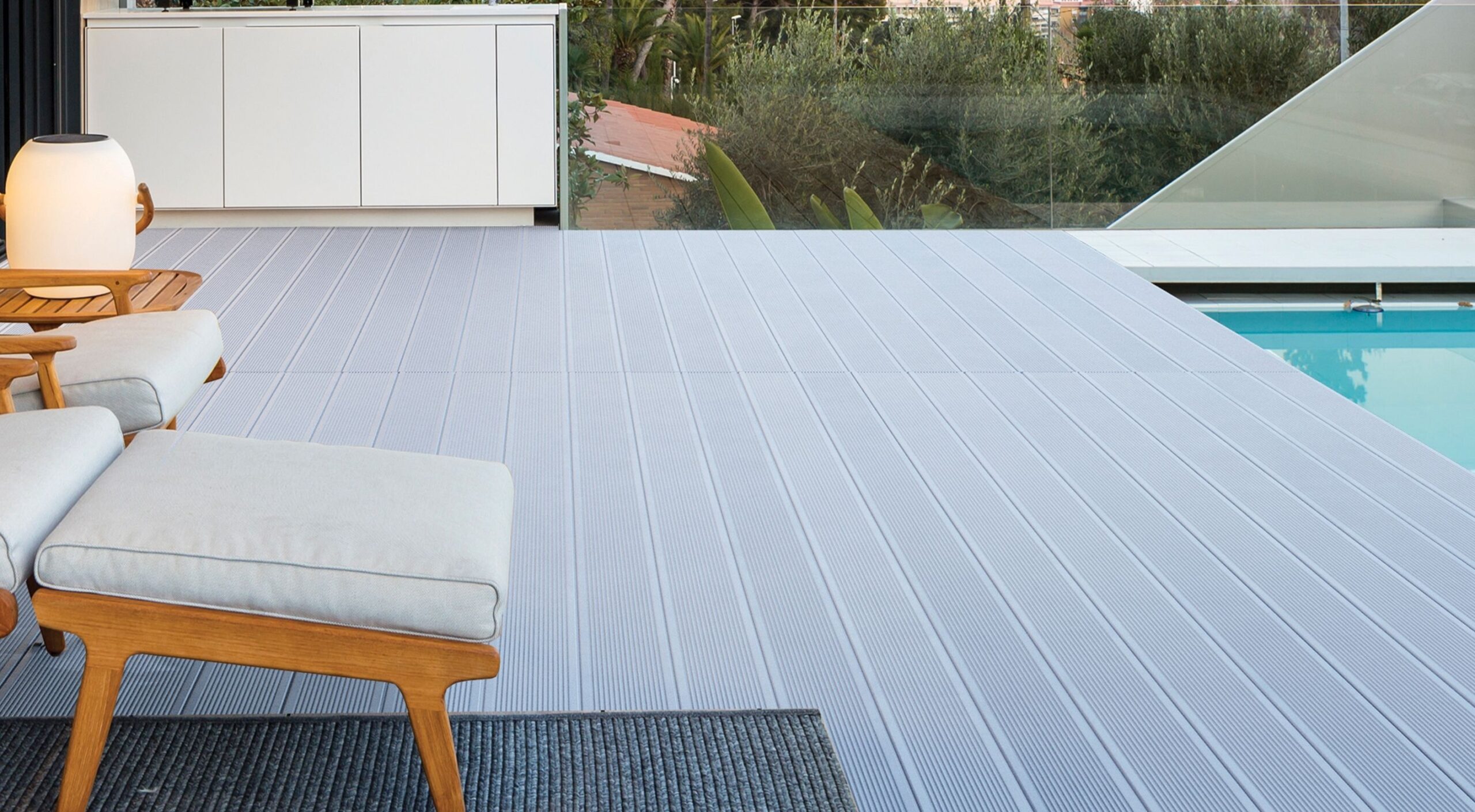
COLOR TERRA BEIGE
Solar Reflectance (SR) = 0.31
Thermal Emissivity = 0.91
Solar Reflectance Index (SRI) = 34