




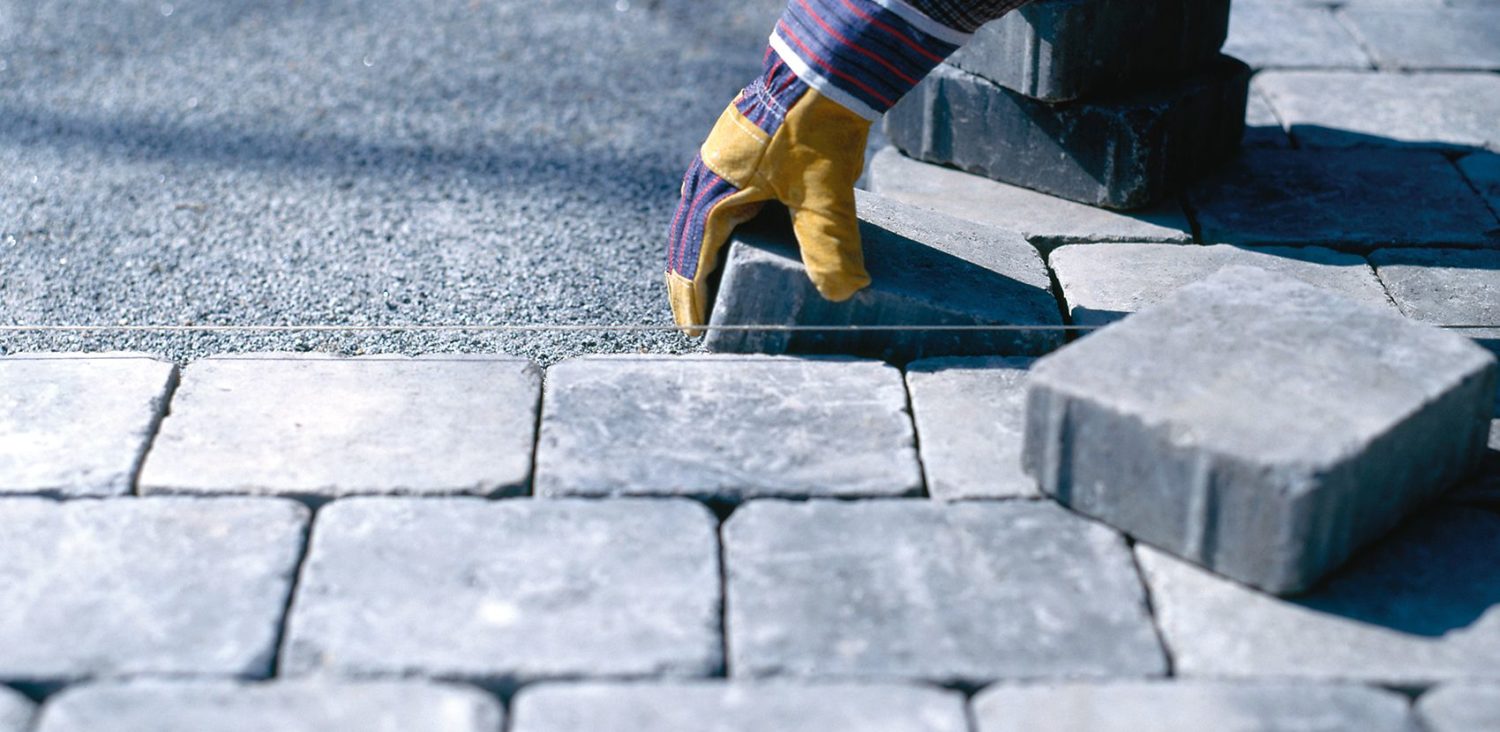
1. Evaluation of delivered materials
The delivered product must be checked against the order placed: verify the format, color, surface finish and quantity. If there are any discrepancies, a verification with the contractor/supplier must be requested before installation.
2. Cross slope
When planning the pavement section, a minimum cross slope of 2% will be required and 4% in water-sensitive surfaces. This slope will be formed during the execution of the subbase.
3. Perimeter restraint
Surfaces built with concrete pavers generally require delimiting the edge of the construction with a stable kerb to prevent horizontal displacement. It is advisable to define distances according to the width of the product to speed up the work. For the restraint of the paved surface, kerbs installed with a concrete foundation suitable for the required height of the surface can be used.
4. Base layer
It must be resistant to deformation (and sufficiently permeable to water). Water ponding should under no circumstances occur above a base layer. It must have a specific thickness depending on traffic loads and the type of existing subgrade. It must be flat and load-bearing. The frost protection layer, if necessary, must also form part of the base layer. 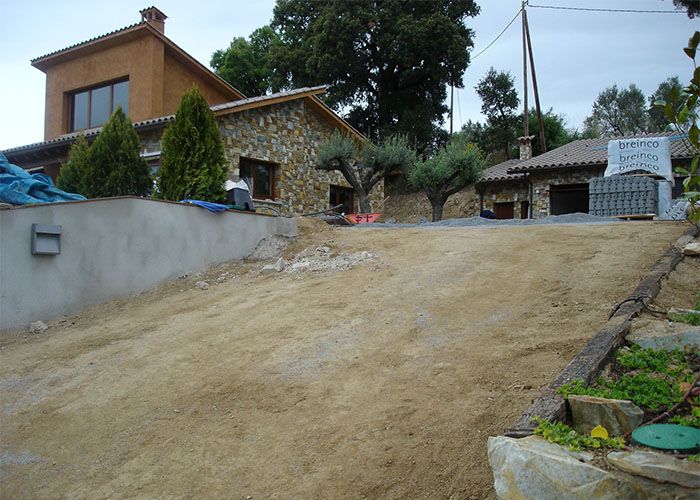
5. Bedding layer
It must have a uniform thickness, generally 4 cm +/- 1 cm. Preferably a mix of sand and gravel with a 0/5 and 0/8 mm particle size. It must be uniform across the entire surface. It cannot be used to compensate irregularities in the base layer. 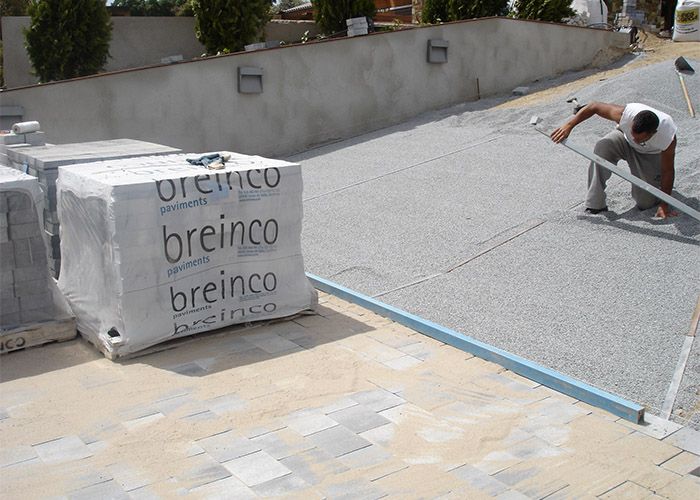
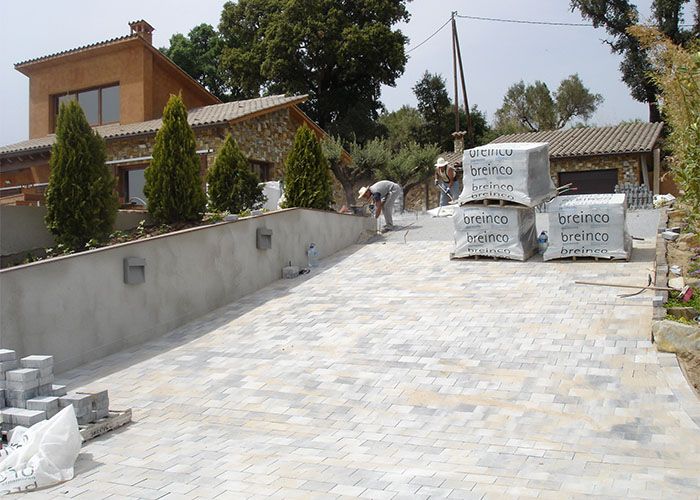
6. Mixing
Always lay the pavers mixing three different pallets. This prevents noticeable large-scale color differences on the surface.
7. Installation
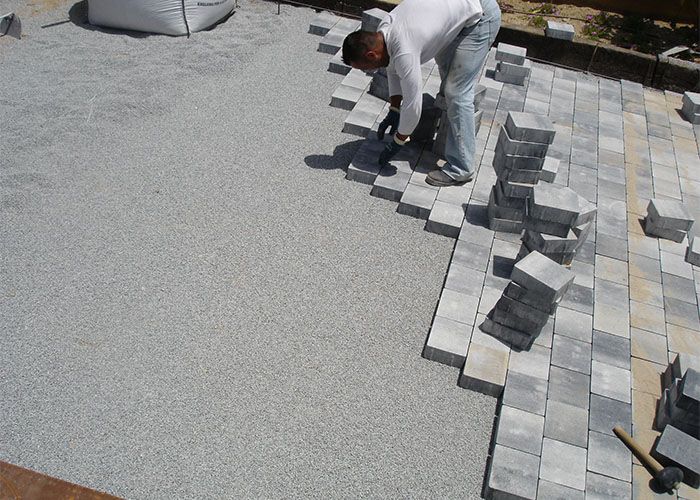
The pavers must be placed according to the planned layout and with sufficient joint width (at least 3–5 mm).
The end pieces in contact with the perimeter restraint should not be smaller than half of a standard piece and should have the least sharp edge possible. Cutting of pieces must be done with a wet saw and with the necessary personal protective equipment (gloves and mask). To keep the surface clean, it is advisable to remove dirt as soon as possible.
8. Joint filling
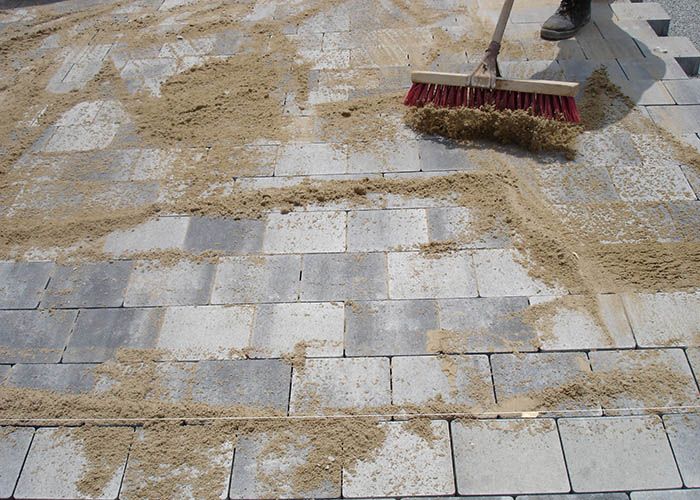
For joint filling, clean sand should preferably be used, especially without clay. The jointing material should be introduced using a broom. The material must be stable against filtration into the bedding layer and have a particle size appropriate to the joint width; the largest aggregate must never be greater than the joint width.
Fill up to the top of the joint.
9. Compaction
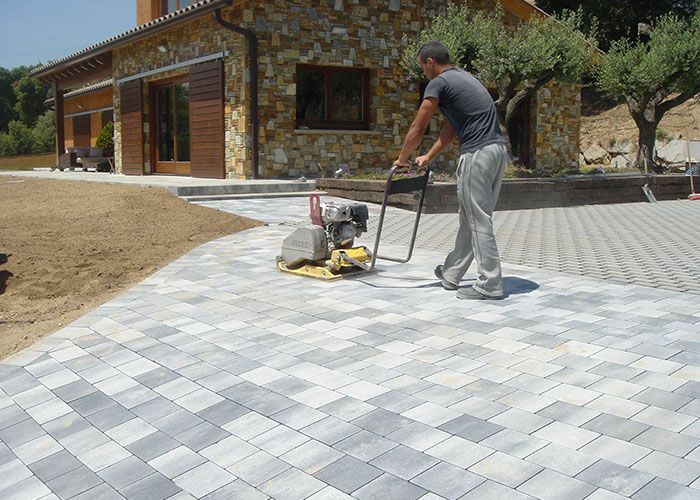
The appropriate compactor must be selected depending on the paver format and it must have a rubber base to avoid damaging the edges of the pavers.
The compaction process must be carried out with a dry surface and before it is put into use. Before compaction, the joints must be filled and the pavement must be properly clean and dry.
If the joint material is lost, the joint filling and compaction process must be repeated until this no longer occurs.
10. Cleaning
Once the surface installation is completed, cleaning must be carried out by sweeping, preferably with the surface dry.
Contact us
🔎Do you need information about our products for your project? You can contact us through:
BIBLIOGRAPHY Pacificpavingstone
