




Tactile Paving
Tactile paving provides physical and visual guidance for people who are blind or have visual impairments. It is used in public spaces to help pedestrians avoid hazards and obstructions.
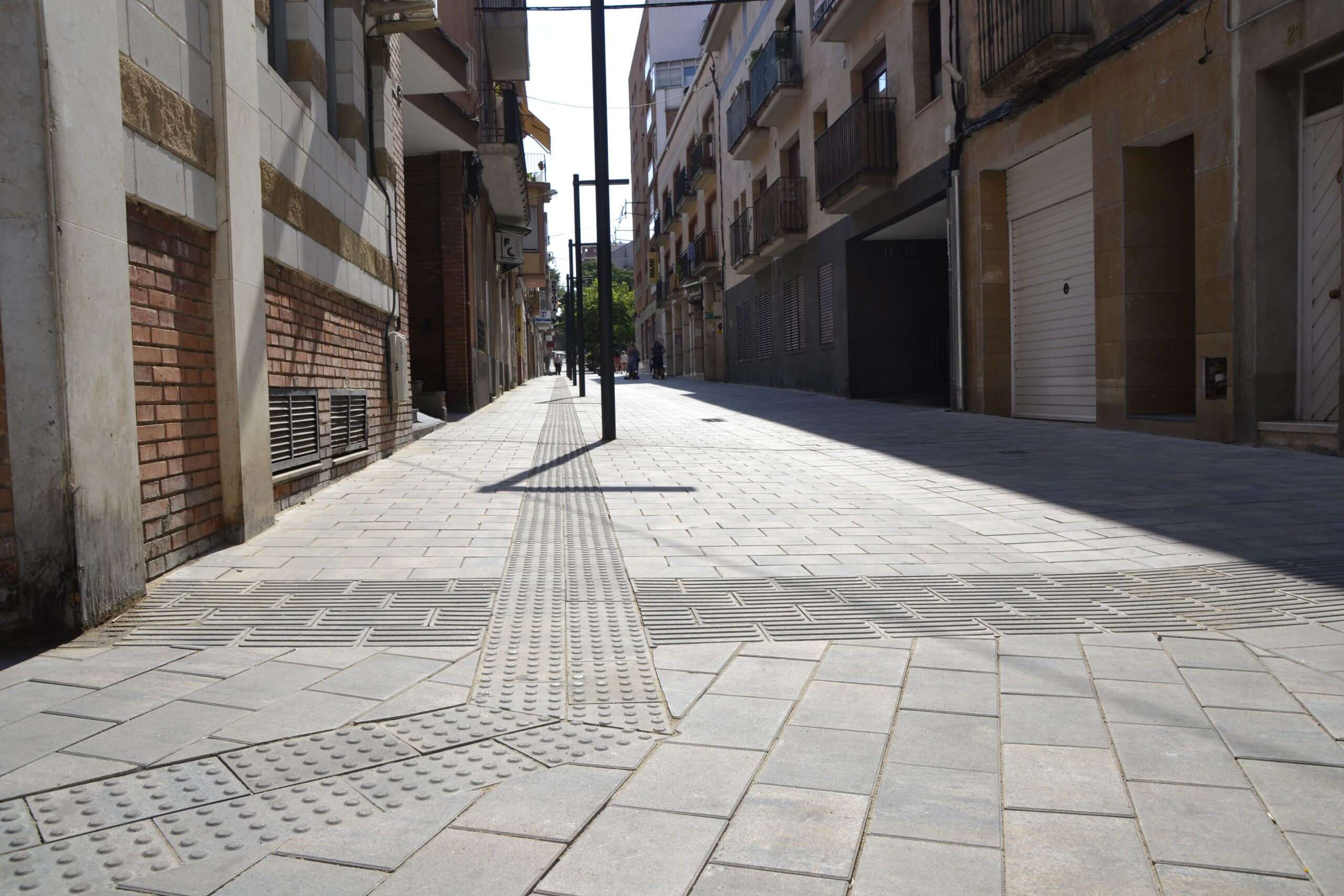
Use of Tactile Paving
Order VIV/561/2010, of February 1, which develops the technical document on basic accessibility and non-discrimination conditions for access to and use of urban public spaces, establishes the criteria to be followed for the installation of tactile paving.
Tactile Crossing
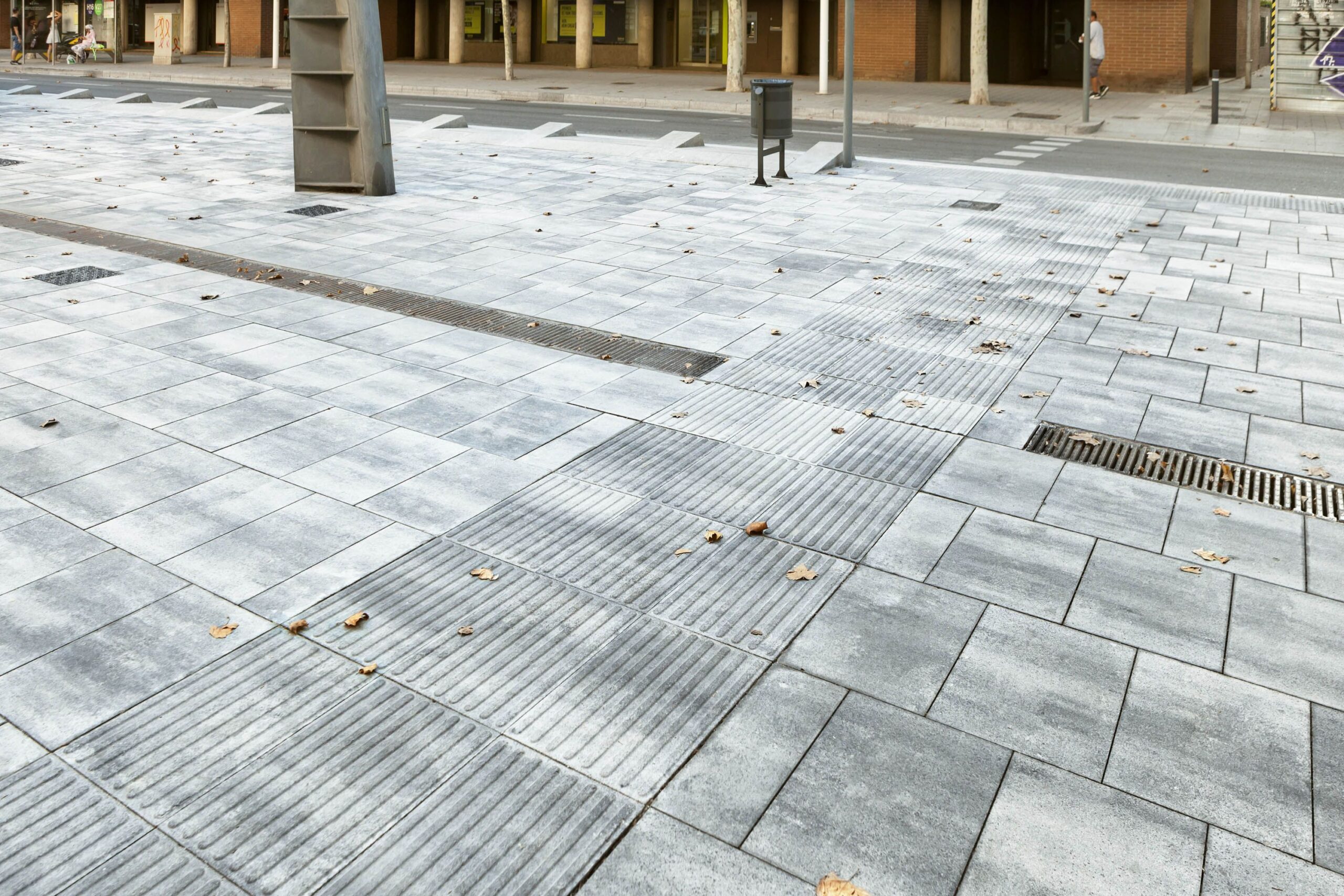
- Guiding pavement. Crossing pathway.
- The raised longitudinal bands of the “Tactile Crossing” piece provide a physical alert for people who are blind or visually impaired.
- It is used in public spaces as a directional guide to help pedestrians avoid hazards and obstructions, and to identify crossing areas.
- The surface bands indicate the walking direction.
Tactile Warning
- Identifies risk and warning.
- The studs on the “Tactile Warning” piece help identify kerbs and road crossings.
- It is used to indicate potential hazards for pedestrians and as a warning to proceed with caution.

Geometry of tactile paving / regulations
The geometry of tactile paving is defined in UNE CEN TS 15209 EX; July 2009 “Tactile surface indicators made of concrete, clay and natural stone”. In Spain, the two main indicators are studs and longitudinal bands.
Tactile paving is manufactured according to UNE 1339:2003 and UNE 1338:2003 standards. This product ensures functionality and durability.
Available formats
Tactile paving is available in the sizes, thicknesses, colors, and finishes of Breinco’s paving range. (See tactile paving manual)
Tactile Paving Manual
Would you like to download this PDF catalogue? Click here and we will send it to you!
