




Author Pieces
We must integrate surface water management into the design of our towns and cities in order to protect the environment, create high-quality places, and achieve maximum benefit, now and in the future. Starting from a real need, we provide the specifier with experience and infrastructure for the development of products and construction systems aimed at improving performance, compositional possibilities, formats, textures, and colors.
We make ideas viable and exchange knowledge.
We strengthen the professional relationship “Company–Technical specialist” through design:
“We needed a very adaptable paving piece that could fill irregular spaces without having to cut it…
we looked at cobblestone pavements…
the idea of the perimeter ‘heel’ to facilitate the placement of pieces in permeable pavements became definitive when applied to curved edges…
…and that is how KODOLÉ® was born.”
Julià Espinàs. Architect.
Espinàs & Tarrasó

Olga Tarrasó Climent, Navares, Valencia, 1956. Architect from the ETSAB in Barcelona. UPC 1982 and Master in Landscape Architecture from the Polytechnic University of Catalonia UPC, 1985. Lecturer at several universities in Agricultural Engineering, Design, Architecture and Landscape Architecture in Spain and abroad. Member of several juries, such as the Ciutat de Barcelona Award (2015 and 2016), FAD Award, etc. Since its foundation in 1981 until 2000, she was a member of the Urban Design Office of the Barcelona City Council, where she developed, among other projects, the Seafront Promenade in Barceloneta (winner of the FAD Award in 1996, among others) and the covering of the Ronda del Mig in Barcelona (winner of the Decade Award 2006, among others). During this period she also designed urban furniture for Barcelona such as the NU bench in 1991.
Julià Espinàs Casas, Barcelona 1954. Interior designer from the Massana School of Arts and Crafts in Barcelona (1975) and graphic designer from Escola EINA (1982). Since the beginning of his professional career, he has worked in various fields such as furniture design, lighting and interior design, architecture, and urban and landscape design. From 1980 to 1989 he worked with C. Crespo, A. Albin and A. Hernando, Architects. He was image and signage coordinator at the CCCB (1993–96). Together with Olga Tarrasó, they were responsible for graphic design, communication, and temporary installations for the UIA Barcelona ’96 (International Architecture Congress). Espinàs and Tarrasó was founded in 1991. Since then, the studio has developed a wide variety of projects in the fields of Landscape, Architecture, and Design. In 2001, Joaquim Tarrasó Climent joined the team, expanding its scope of work to Scandinavian countries.

Kodolé® Paver
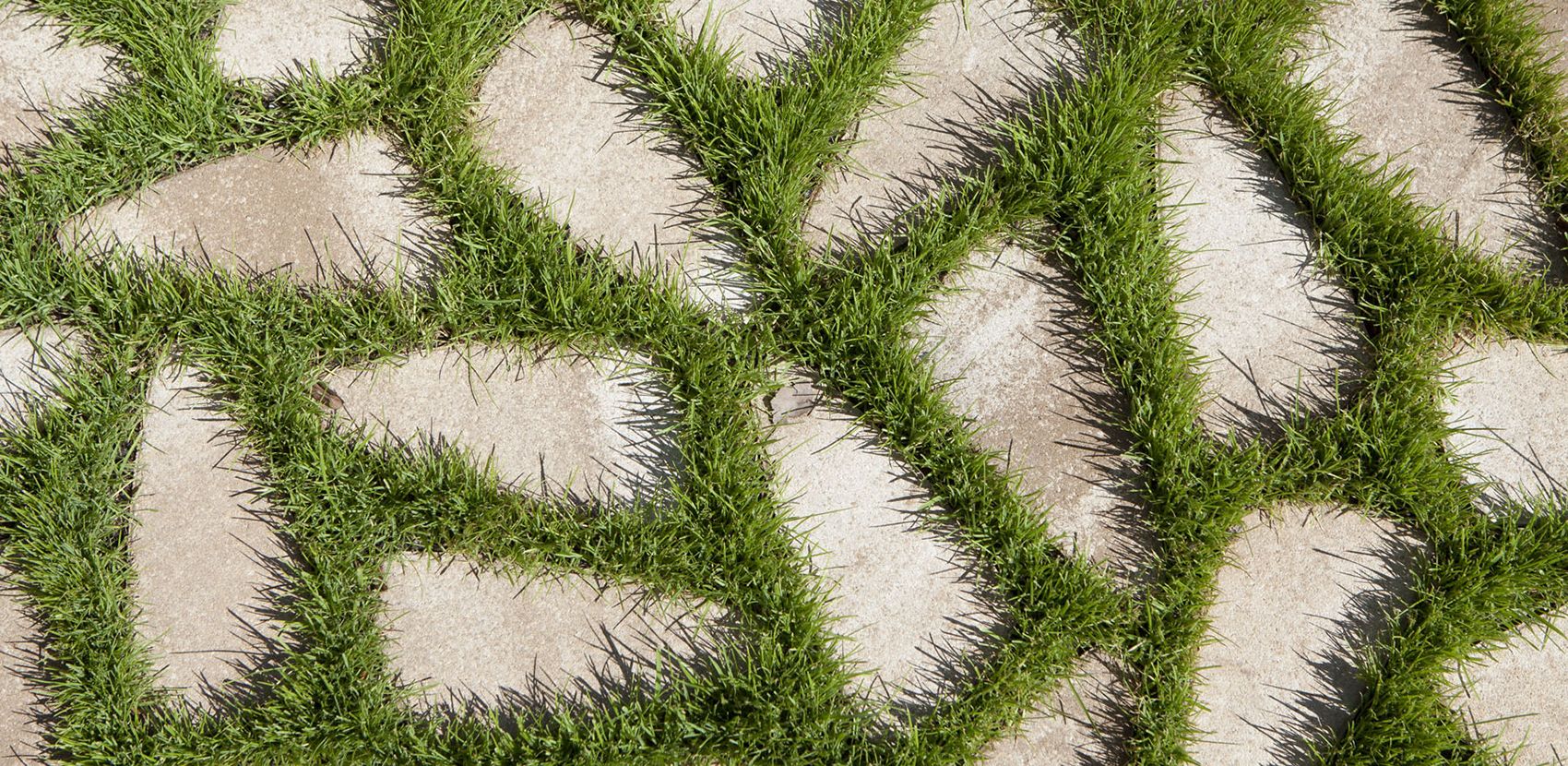
KODOLÉ® is a mixed permeable pavement made of triangular pavers that include an integrated heel at the base of the piece. This section facilitates installation of the pavers, allowing a permeable pavement with fillable joints without the need for spacers.
This curved heel system is protected under patent application in Spain and has a registered community design.

Properties of Kodolé®
1. Permeable
Creates a minimal surface joint of 2 cm that enhances permeability.
2. Easy installation
The patented Talón System integrated into the base of the piece allows installation without spacers.
3. Adaptable
Its triangular shape allows adaptation to any paving area, including organic forms. No cutting of pieces is required.
4. Green joint
Creates a cooler paved surface.
5. Aesthetic value
6 different colors to create any combination.

Eco-Suds® System Benefits
1. Stormwater control
Maintains and protects the natural water cycle. Prevents flooding. Recharges groundwater aquifers by restoring subsurface flow to natural channels through infiltration.
2. Water quality control
Reduces the urban heat island effect (temperature difference between urbanized and non-developed areas). By lowering surface temperature, air pollution trapped by thermal inversions is reduced. Decreases the amount of pollutants reaching receiving environments.
3. Comfort and livability
Creates a more comfortable urban natural environment for people. Improves quality of life and urban aesthetics.
4. Biodiversity
Creates and maintains a better environment for nature. Biodiversity includes the number, abundance, and distribution of all living species on Earth.

Objectives of Sustainable Urban Drainage
The main function of sustainable urban drainage is the control of both the quantity and quality of urban runoff water, but it is not the only objective. It can be summarized as follows:
1. General
Improve overall water management, starting with stormwater.
2. Environmental
Protect natural systems and improve the water cycle in urban environments, both in terms of quality (reducing runoff pollution, the first flush) and quantity (reducing runoff volumes and peak flows through retention systems and reduced impermeable areas).
3. Landscape
Increase landscape quality within the urban environment, integrating water flows and naturalizing part of the hydraulic infrastructure.
4. Economic
Minimize infrastructure costs while increasing environmental value. Reduce costs by decreasing inflow volumes to treatment plants and stabilizing contaminant loads. Reduce potable water demand through integrated water resource management and reuse of rainwater and greywater.
5. Protective
Reduce flood risk in cities.

BIBLIOGRAPHY Sudsostenible & Ciria
